MS CEO Envisions 20 Million AI Agents as 60,000 Employees Are Offered an Exit
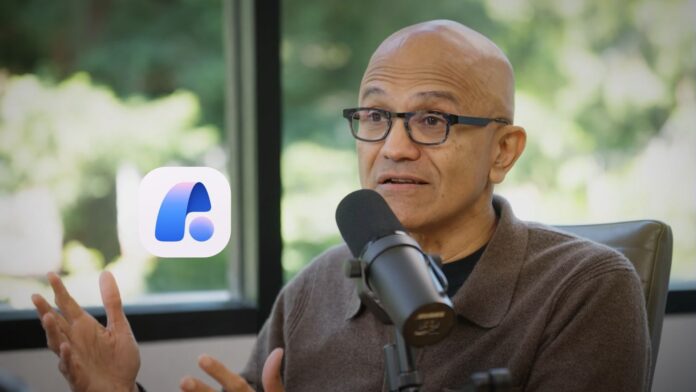
MS CEO Satya Nadella told LinkedIn co-founder Reid Hoffman that MS could one day have “2 million agents or 20 million agents” working in a loop with its 200,000 employees. The June clip is going viral on X, less than two weeks after MS offered voluntary exits to about 60,000 employees, roughly a quarter of its workforce.
MS says AI is not behind the buyouts. However, a former MS product manager argues that the company needs fewer people and more agents, and Nadella’s interview explains why that possibility no longer sounds far-fetched.
Nadella Envisions 20 Million AI Agents Working Alongside MS’s 200,000 Employees
The viral post on X paraphrases Nadella considerably. On Hoffman’s Possible podcast, published on June 5 shortly after Build 2026, Nadella asked what work would look like when “we have 200,000 employees and we have, let’s say, 2 million agents or 20 million agents all in a loop.” Of course, “let’s say” frames the idea as a thought experiment. Interestingly, he raised the figure again later in the conversation, saying, “There may be 20 million agents at MS.”
He compared the shift to the early 1980s, when nobody would have believed that “4 billion typists” would wake up every morning and start typing because offices still relied on typist pools. As someone who types for a living—an obvious, sarcastic oversimplification—I cannot argue with that. “AI is not a technology; it’s the future of the firm,” he said.
Nadella believes coding illustrates where all work is headed. AI progressed from code completion to chat, then to agent mode for small tasks, and finally to long-running agents that “you could literally fire and forget.” You provide “a high-level intent,” and the agent “would go off and do the full PR, and you would accept the PR.” A MS engineer has already said that “typing code is absolutely over,” while Nadella says, “What is happening in coding will happen even in knowledge work.”
Nadella Already Manages 100 Agents, So MS Built an Inbox for Them
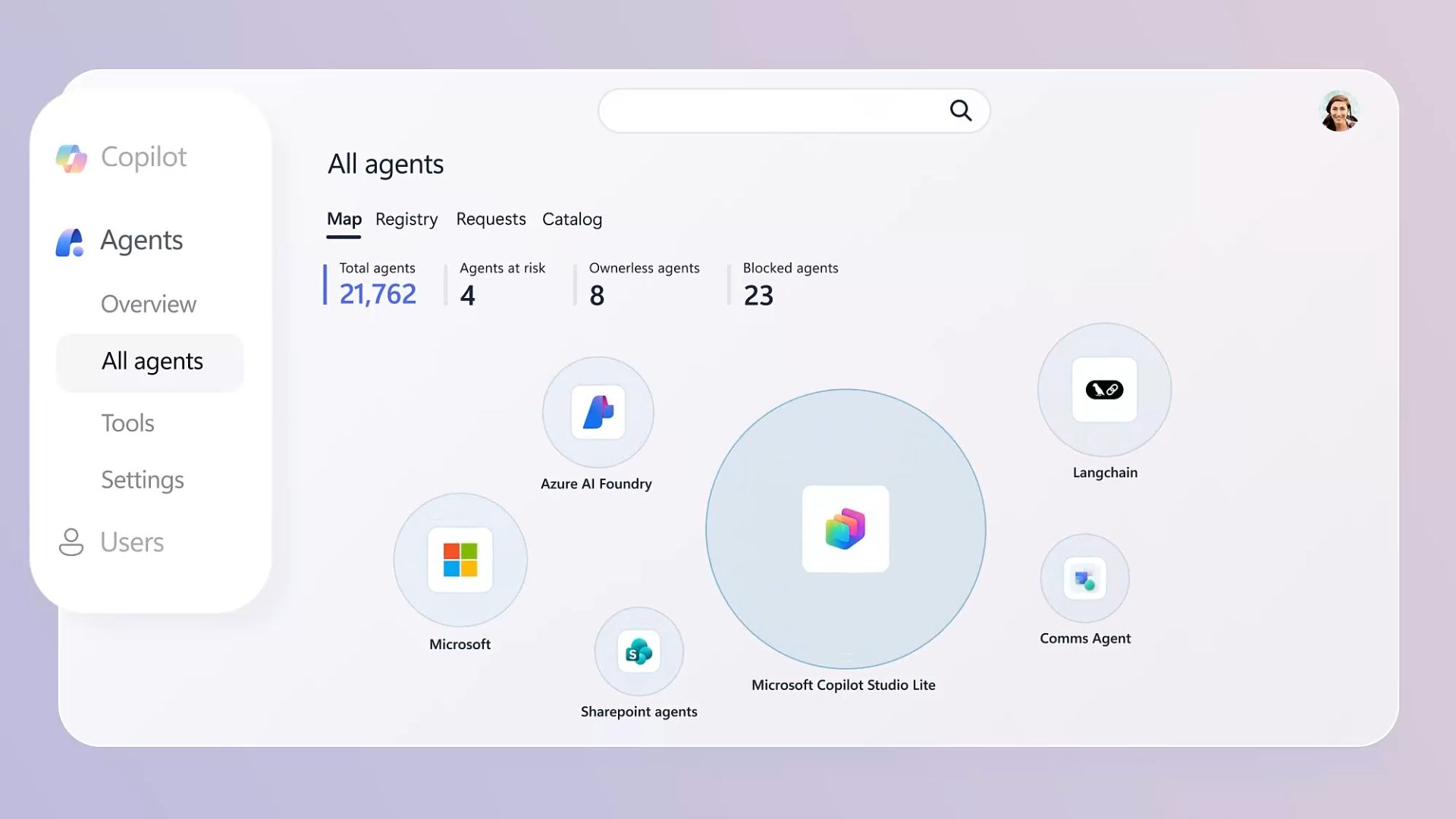
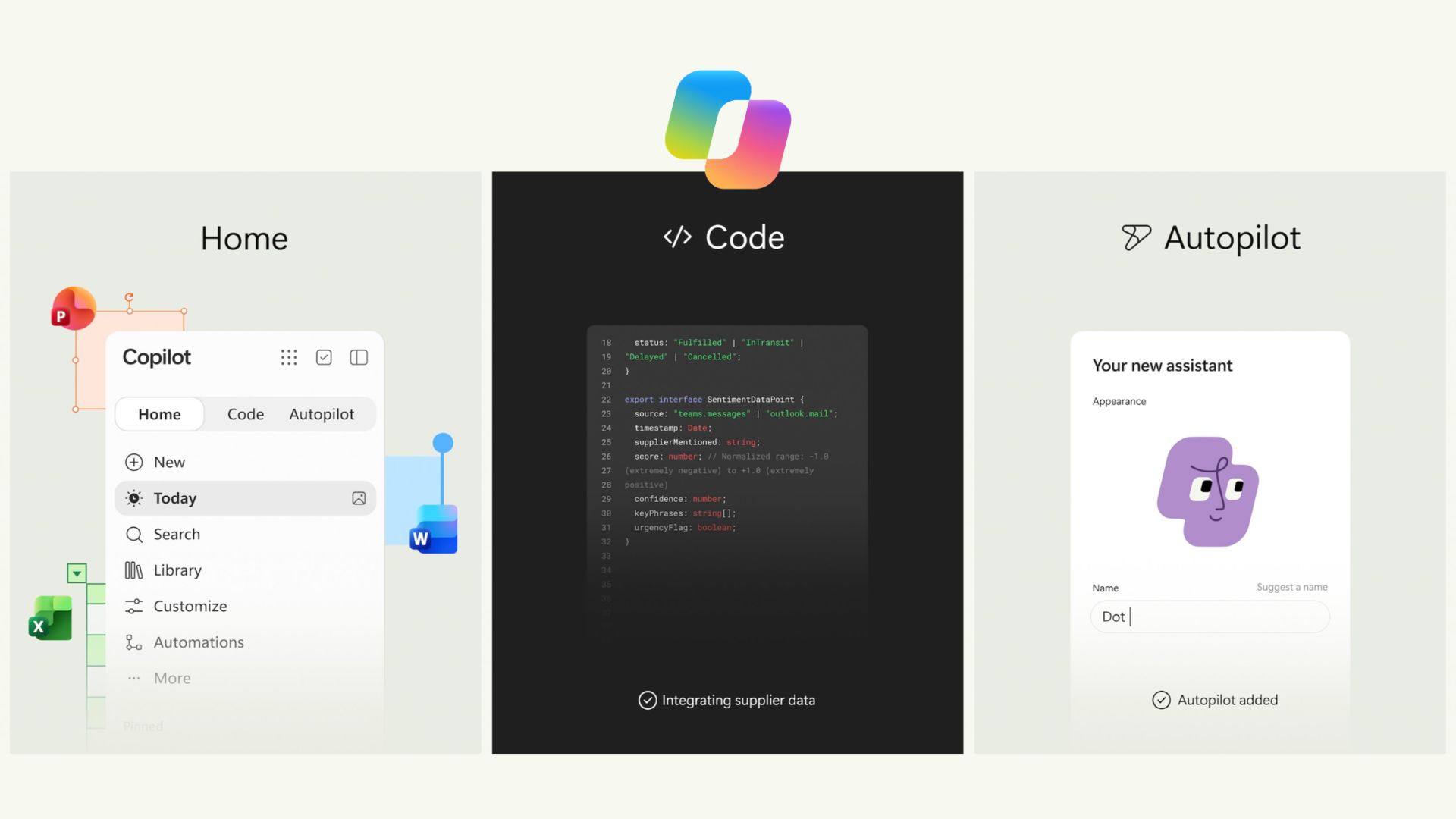
Nadella says he has “100 CLI sessions open” running 100 agents. The cognitive load became so high that MS built what he calls an “agentic development environment.” The new GitHub Copilot app “looks like an inbox, except it’s an inbox of agents.”
“They need to be fully inspectable, fully auditable,” he said, because agents that write and run code require identities, sandboxes, and policies. MS’s answer is Agent 365, which extends Entra, Defender, and Purview to agents for $15 per user per month. Given that MS admitted last year that agents in Windows 11 can hallucinate and even install malware, auditing is not optional—especially as the company describes Copilot as a “new OS” for work.
MS Offers 60,000 Employees an Exit but Expects Fewer Than 3,000 to Accept
On October 26, Chief People Officer Amy Coleman announced a Voluntary Exit Offer for employees at level 70 and below—the vice president ceiling—in participating organizations across the US, Canada, the UK, and India. It “gives participating organizations another way to adapt their workforce to changing needs,” she wrote. Notably, Windows and Copilot are among the participating divisions, according to Bloomberg.
However, the figure of 60,000 should not be mistaken for layoffs, as many people did on social media. A MS spokesperson told Fortune that the company expects “an under 5% uptake,” meaning fewer than 3,000 departures from its 223,000-person workforce. The package is close to standard severance, unlike the more generous retirement offer made earlier this year, which more than 30% of approximately 8,750 eligible US employees accepted.
When MS cut about 4,800 roles in July, Coleman wrote that “the roles eliminated today are not being replaced by AI” in a memo that also stated, “AI is changing how work gets done.” Meanwhile, MS spent $45.2 billion on capital expenditure last quarter, with about three-quarters allocated to short-lived assets such as chips. Last year, Nadella told investor Brad Gerstner that headcount would grow again, but “with a lot more leverage than the headcount we had pre-AI.”
A Former MS Product Manager Says the Company Needs Fewer People
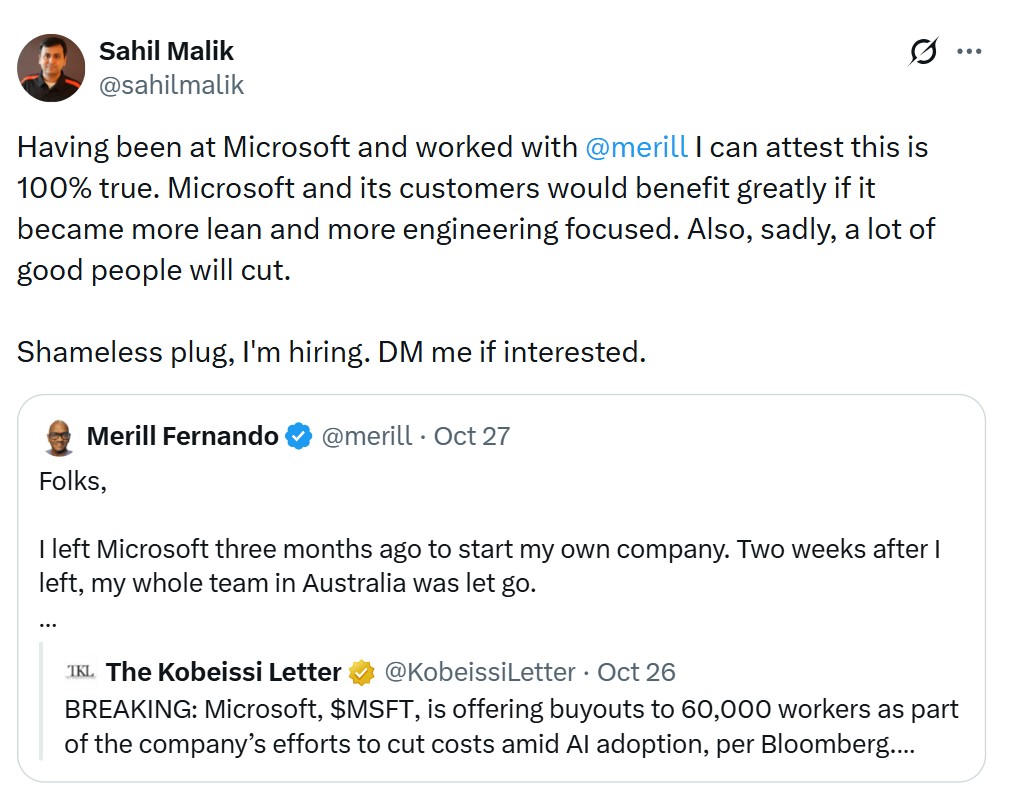
Merill Fernando, a former product manager on MS’s Entra team, posted on X on the day the offer was announced. Two weeks after he left MS, his entire team in Australia was let go. He called it “brutal,” but still believes MS needs fewer people.
Entra introduced managed identities in 2017 to keep secrets out of code, but most MS teams were slow to adopt them until the company was hacked. “Six years, and a major breach, to get there,” he wrote. With agents and fewer people, he argues, it could have happened “in months, not years.” What MS needs “is fewer people, leaning hard into agentic work,” because OpenAI and Anthropic are shipping at a pace the software giant cannot match.
Former MS employee and MVP Sahil Malik agreed that MS “would benefit greatly if it became more lean and more engineering focused,” while acknowledging that many talented employees would be cut.
Nadella Says the AI Industry Must Show People the New Jobs
Nadella does not pretend that everything is fine. When technology leaders say “white-collar jobs are gone” and then celebrate building the technology responsible, he asks, “Why would anyone want you to be successful?”
According to Nadella, simply citing the “lump-of-labor fallacy” is not enough. “What are the new jobs? What are the wages of the new jobs that I can now go apply for, train myself for?” he asked. Data centers, he added, must demonstrate that they benefit the local tax base and schools while responsibly addressing water use and electricity costs.
Nadella and OpenAI’s Sam Altman disagree about where AI should run, but both are betting that agents will take on a substantial share of our work. If those agents eliminate repetitive tasks and enable a small team to deliver what once required an entire organization, I am in favor. But will 20 million agents make MS’s employees more productive, or give the company a reason to need fewer of them?
Windows Latest depends on readers like you. Make us your preferred source on Google Discover and Google Search, and help our independent reporting reach more people.