StatCounter’s Reporting Error: Windows Market Share Misclassification
According to StatCounter, a web analytics company, Windows’ market share appeared to have dropped from approximately 79% to just 56%. However, as expected, this turned out to be a reporting error.
Windows Market Share in 2026
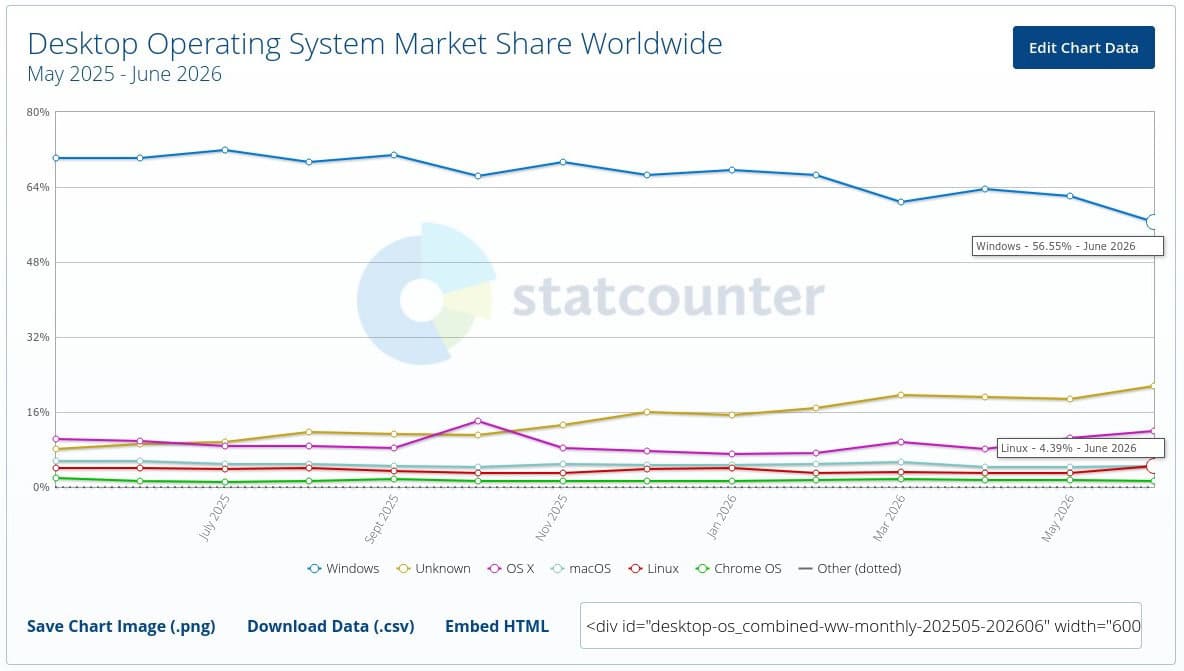
In April 2026, StatCounter reported that Windows held around 79% of the desktop market. By June 2026, the same company indicated that Windows’ market share had fallen to 56.55%, a decline of 22.45 percentage points or 28.4% in just two months.
During the same period:
- Linux share climbed to 4.39%.
- Apple’s OS X and macOS accounted for 16.37%.
These numbers quickly gained traction among Linux fan sites like Linuxiac and influencers such as “Chubby,” who shared the data on social media platforms, suggesting that Windows’ market share was rapidly declining.
StatCounter Rectifies the Error
Despite Windows’ reputation being under scrutiny, its market share has not fallen below 60%. StatCounter acknowledged its mistake and released updated data showing Windows at 72%, with the likelihood of climbing back toward 78% as numbers stabilize over the coming weeks.
Even if the initial data were correct, the reported growth in Linux’s market share does not account for the supposed 28% drop in Windows usage. So, where did the missing Windows users go?
The Mystery of the “Unknown” Category
By analyzing StatCounter’s data, it was discovered that an operating system labeled “Unknown” suddenly accounted for 21.45% of the desktop market. This category likely includes devices where the browser’s user agent was modified, unavailable, or misidentified by StatCounter.
This suggests that many of the “Unknown” devices could very well be Windows PCs. The more plausible explanation is that StatCounter misclassified a significant number of devices, rather than a dramatic drop in Windows’ market share or a significant shift to Linux.
StatCounter’s History of Reporting Errors
This isn’t the first time StatCounter has reported questionable numbers:
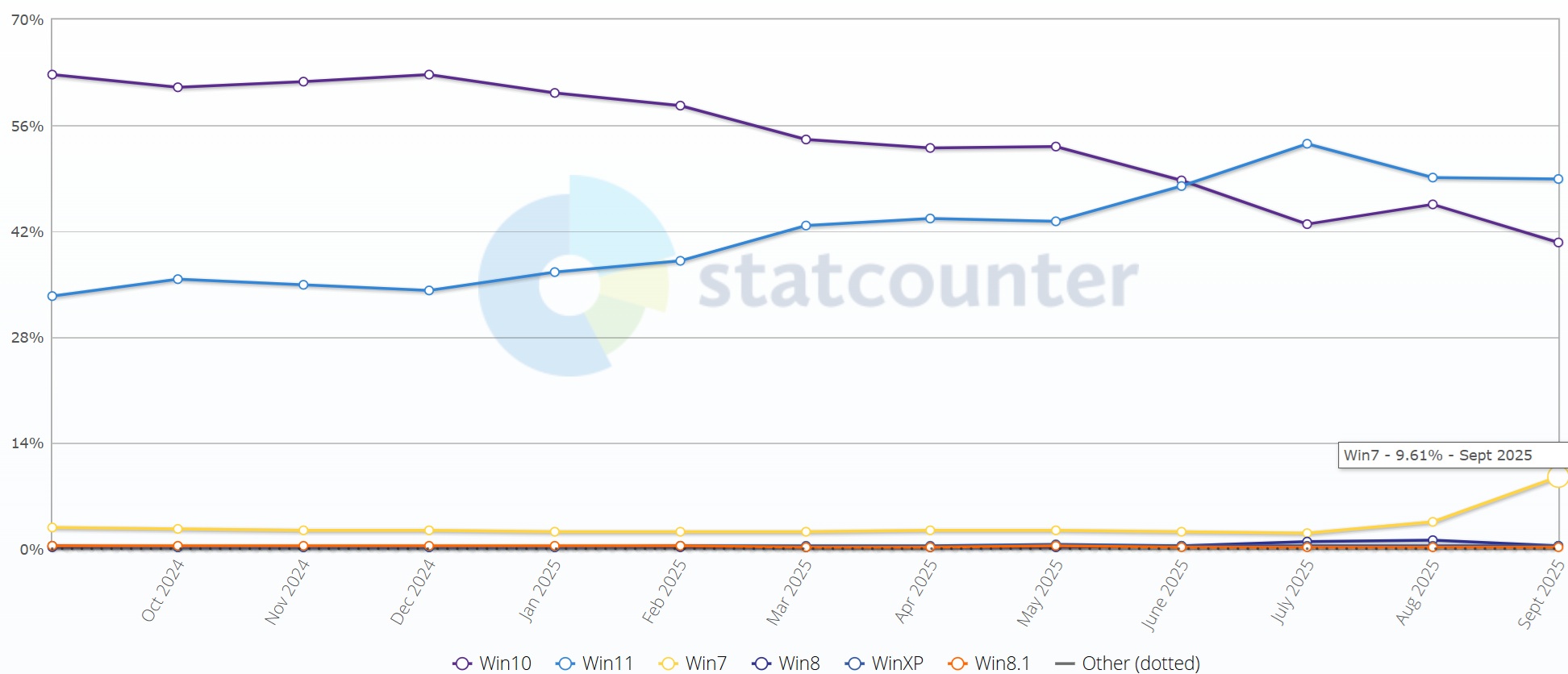
- In 2025, it was reported that Windows 7 was gaining market share, allegedly to highlight Windows 11’s unpopularity. However, StatCounter later corrected this, showing Windows 7 at less than 1% of the desktop market.
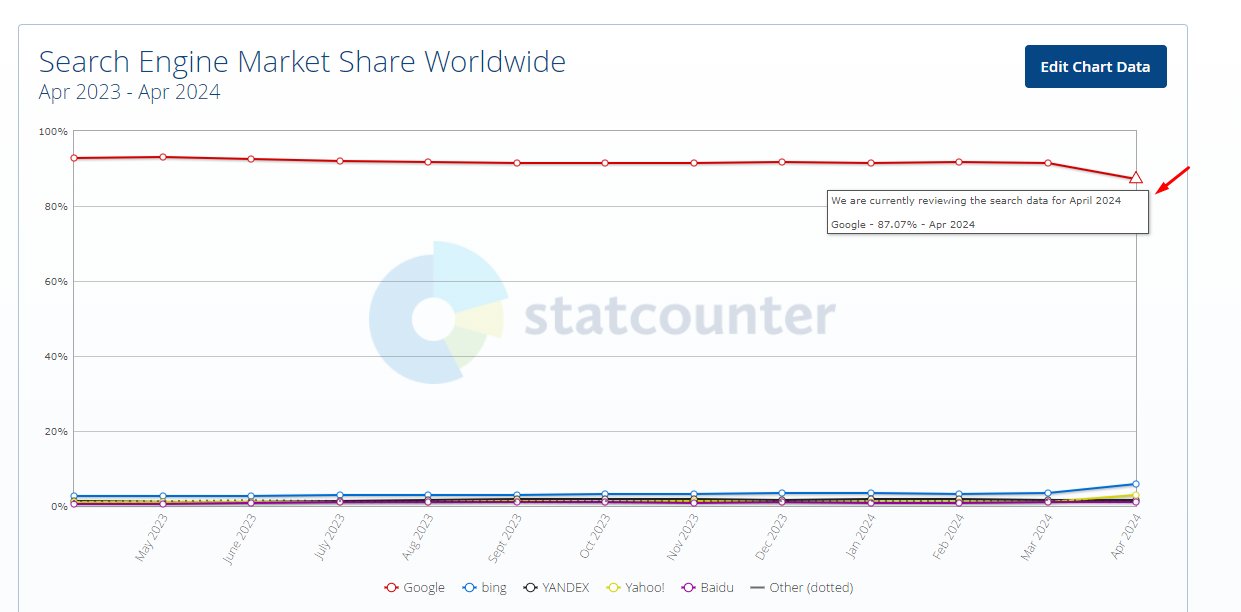
- In 2024, StatCounter reported a drop in Google’s market share, which was falsely attributed to ChatGPT. This too was later confirmed to be a reporting error.
Understanding StatCounter’s Limitations
StatCounter is one of the largest independent web analytics companies, tracking billions of monthly page views across over 1.5 million websites. However, its data is based on page views, not unique devices or users. It uses anonymous metrics and user agent detection to estimate market shares for browsers and operating systems.
While StatCounter’s large dataset provides a general idea of market trends, its numbers are still estimates and prone to errors. For instance, bots, AI crawlers, scrapers, and modified user agents can distort results, causing temporary spikes or drops in reported market shares.
StatCounter’s Response to Reporting Errors
StatCounter acknowledges these challenges and attempts to remove bot activity while making adjustments for prerendering in Google Chrome. However, as noted in their documentation, the data is generally published as recorded. Mistakes like the recent Windows misclassification, therefore, are bound to happen.
For June 2026, StatCounter has already corrected the inaccurate figures, attributing the issue to ambiguous Windows traffic being misclassified as “Unknown.”
Windows’ Current Position
Despite these errors, Windows appears to be in a strong position. Recently, MS confirmed that Windows is installed on 1.6 billion devices, a number expected to grow as the company continues improving the operating system.
Conclusion
StatCounter’s data can provide valuable market insights, but it should not be blindly trusted. Its estimates are subject to errors caused by misclassification, user agent modifications, and other factors.
What about you? Have you ever considered switching to Linux? Let us know in the comments below!
Windows Latest depends on readers like you. Make us your preferred source on Google Discover and Google Search, and help us reach more people with our independent reporting.