The best open world games on PC
Below is our curated list of the best open world games on PC—designed for players who crave freedom beyond linear constraints. You reject rigid corridors and invisible walls. When you see a mountain, you climb it. You seek stamina bars that deplete with effort, wildlife to track, and worlds where exploration is not just encouraged—it’s the core directive.
Open world games aren’t for everyone—but if you want immersion in a space that’s atmospheric, serene, or as calming as a punch in the face, we’ve got you covered. Treat this list like a textual map: each title a destination, each description a waypoint. Think of Ubisoft’s blinking side quests—not as chores, but as narrative breadcrumbs. Or imagine an audiolog from Ed (that’s me) saying, "Have yourself a nice evening, cheers", triggered the moment you hit play.
Watch on YouTube
The best open world games
This list is a living document—periodically updated, though the timing remains delightfully unpredictable. Just now, Subnautica has been replaced by Minecraft, a purer open-world sandbox. Dragon’s Dogma 2 has been removed in favor of The Witcher 3, whose masterful storytelling integrates seamlessly with its world-building. New additions include Outer Wilds, celebrated for its urgent, time-loop-driven puzzles and profound reverence for cosmic scale; Just Cause 3, a joyful antidote to self-seriousness; and Wheel World, a peaceful cycling adventure born from tranquility—not destruction or suffering.
- The Elder Scrolls V: Skyrim
- A Short Hike
- Hitman: World Of Assassination
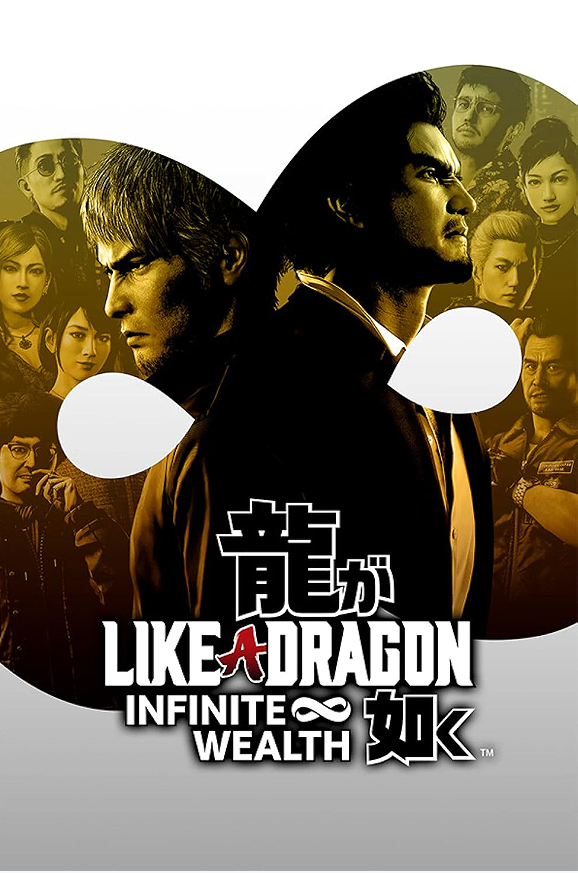
- Like A Dragon: Infinite Wealth
- Forza Horizon 5
- Baldur's Gate 3
- Red Dead Redemption 2
- Minecraft
- No Man's Sky
- Metal Gear Solid V
- American Truck Simulator
- The Witcher 3
- Cyberpunk 2077
- Horizon Forbidden West
- Elden Ring
- Assassin's Creed Shadows
- Outer Wilds
- S.T.A.L.K.E.R. 2: Heart Of Chornobyl
- Just Cause 3
- Wheel World
The Elder Scrolls V: Skyrim

Some games become cultural touchstones precisely because their tropes are endlessly quotable—and yet deeply beloved. How many times has Skyrim been re-released? How often have we joked about “arrow to the knee” or “see that mountain”? The humor endures only because the game does too. Skyrim remains wildly popular—not just for its breathtaking vistas and immersive world, nor solely for its charmingly janky physics (like being flung skyward by a giant’s first swing), nor even because of the 2016 Special Edition or the Anniversary Edition that officially embraced modding.
It’s all those things—and more.
Skyrim, arguably, perfected the Bethesda RPG formula: you’re the prophesied “Chosen One,” yet it never feels smug or alienating. Simultaneously, you’re free to ignore destiny entirely—to wander slowly through northern snow forests instead of hunting dragons or harvesting souls for Shouts. It’s a flexible, joyful, Tolkien-esque fantasy in its own right. And the modding community? That elevates it further—into a realm where dragons can be replaced by Thomas the Tank Engine. For deeper insights, revisit our retrospective collection assembled around the Skyrim Special Edition launch.
A Short Hike

A Short Hike claims the title of the loveliest game on this list. You play as a charming penguin determined to reach the summit of Hawk Peak—a tranquil ascent you tackle at your own pace. Fish by riverbanks. Dive off cliffs. Soar toward hidden treasures.
But what makes the climb unforgettable is encountering fellow hikers—some of whom invite you to spontaneous races. And Mark Sparling’s soundtrack? Lush, soothing, and so evocative that Katharine purchased it immediately after playing—finding it more than satisfied her lingering Animal Crossing FOMO. This is a world worth savoring. Please give it a try.
Hitman: World Of Assassination

Hitman: World Of Assassination may not fit the traditional definition of an “open world” game—but its meticulously crafted sandbox levels offer unparalleled freedom and depth. You control Agent 47: a bald, barcode-marked assassin renowned for precision garroting and dry wit. Your mission? Eliminate high-profile targets using garrotes, disguises, or explosive rubber ducks.
What makes Hitman exceptional as an open world experience is the immediate, unbounded agency it grants. From the moment you enter a Formula One circuit, an Italian town, or a secluded manor, the location breathes as a living, interactive ecosystem. Security systems stand between you and your target—but they’re designed to be broken, bypassed, or bewildered. As Brendy wrote in his Hitman 3 review: “you know you’re getting some world-class level design, some tense moments of dark comedy improv, and a type of clockwork murder toy that nobody else makes.”
Like A Dragon: Infinite Wealth

Yakuza: Like A Dragon introduced players to protagonist Kazuma Kiryu and the vibrant cityscapes of Isezaki Ijincho and Kamurocho Sotenburi. In Like A Dragon: Infinite Wealth, you’re transported to Hawaii—a sun-drenched, authentic recreation where every detail matters. Though an optional island area offers an upscaled Animal Crossing-style diversion, the real joy lies in cruising Honolulu on a Segway, described by Ed as an “unmissable Hawaiian treat.”
As ever, seemingly minor side quests spiral into elaborate, multi-part narratives—yet the setting retains authenticity thanks to meticulous attention to real-world landmarks: Kona coffee, mango shave ice, living statues on Waikiki Beach, and the canals, malls, and markets of Honolulu. It’s a genuine holiday—running freely while indulging in the series’ signature blend of wacky antics and heartfelt fun, now infused with a beach-party spirit.
New to the franchise? Start with Ed Thorn’s guide: What order should you play the Yakuza games?
Forza Horizon 5

Justin called Forza Horizon 5 “as close to flawless as any racer has ever come.” Regardless of your stance, it’s undeniably a magnificent open-world racing festival—chopping across Mexico’s dusty beaches, tangled jungles, and sunlit streets with infectious carefree energy. Its map teems with inventive twists on classic race formats, and it may well be one of the most uplifting games ever made: crash your Bugatti Veyron through someone’s porch, and you’ll earn a little reward for doing so.
Perhaps Forza Horizon 5’s greatest strength is its accessibility: it’s a racing game for people who don’t consider themselves racing fans. Drive solo or with friends—you choose how seriously to take it. If you are a speed enthusiast, explore our list of the best racing games on PC.
Baldur's Gate 3

There’s much to say about Baldur’s Gate 3. First: its turn-based combat, built on Dungeons & Dragons’ D20 system, isn’t for everyone. But if you embrace it, the fantasy world of Faerûn is extraordinary. Maps interlock like puzzle pieces—filled with secrets and eccentric characters equally likely to ask you to steal an egg or track down a missing child—or, yes, be engaged in rather private barn activities. The effort to save Faerûn is worthwhile just to keep exploring.
From waking in the wreckage of an exploded ship, you uncover temple ruins, rocky coasts, secret druid groves, sun-dappled forests, and goblin camps throwing wild parties. Need a bustling city with docks and fortresses? A swamp? The Underdark—a bioluminescent underground realm populated by mushroom people? A cursed land shrouded in life-leeching fog, anchored by an equally cursed castle? A vampire’s stronghold? A lair in literal hell? Baldur’s Gate 3 delivers all of it—and more. As Alice Bell wrote in her glowing review: “you will want to play again.”
Red Dead Redemption 2

Red Dead Redemption 2 may seem like an obvious inclusion—but it’s obvious for a reason: it’s exceptional. Its open world is a staggering technical and artistic achievement—immersive, emotionally resonant, and deeply transportive. Witness the diversity of flora and fauna. Hear hooves crunch in snow. Crouch atop a cliff and watch bison graze. It may lack the density of, say, Elden Ring, but that’s not Rockstar’s intent.
As noted in our review, RDR2 functions more like an orchestration of action rarely seen in open-world design. Carefully curated heists unfold alongside a slow-burning story charting the rise and fall of Arthur Morgan’s gang as shared ideals fracture. Early on, you enjoy relative freedom—to relax, soak in a bubble bath, hunt alligators, or simply roll a potential purchase around your hands in a quiet town shop. Red Dead Redemption 2 is special.
Minecraft

Ahhh—the game that needs no introduction. At its core, Minecraft is a blocky, procedurally shaped open-world sandbox where possibility is bounded only by cubic geometry and stackability. At its simplest, you survive hostile nights and avoid moaning creepers eager to explode your existence. At its most extraordinary, you build automated factories, skyscrapers, or populate servers with unwitting battle royale participants. In short: this is an open world you create.
As Alec Meer wrote in his original review: “it has become something far more than a mere game.” Today, it’s played as a walking sim, modded to photorealism, or even adapted into cinematic experiences. (Though perhaps skip the last one.)
No Man's Sky

No Man’s Sky launched divisively in 2016—but Hello Games has since transformed it through relentless iteration. This is a game fundamentally about open worlds—thousands of them—charting courses through unknown stars and discovering what lies beyond. Over 30 free updates have added vehicles, new gameplay modes, customizable ships, salvage operations, and Pokémon-style creature battles, among countless other enhancements.
Crucially, nearly everything on every planet you explore—including the vast majority of the galaxy’s 1018 worlds—is generated procedurally. The result? Unexpectedly beautiful landscapes: fern forests, lopsided dinosaurs, violet rocks, yellow skies—visions only true randomness could conjure. It’s one of those rare games where the best time to start playing is always today.
Metal Gear Solid V: The Phantom Pain

Metal Gear Solid was revered for intricate stealth—but Metal Gear Solid V expanded that depth across enormous, open-ended environments. Sneaking across Afghanistan’s sun-scorched mountains is as much an exercise in imagination as it is in skill. Yes, you can circumvent an enemy outpost the long way—but why not ride your horse straight through it, hiding behind its body? Or tranquilize soldiers and ship them home via comically oversized balloon? Or skip stealth entirely and call in your helicopter—blasting A-Ha’s Take On Me as you gun them down?
The world of MGSV delights—but it’s the expressive, playful choices you make within it that make it truly special. Every return to enemy territory is a fresh canvas for creative problem-solving. Part immersive sim, part stealth sandbox, it’s genuinely unique. For deeper analysis, read Daniel Hindes’ full review.
American Truck Simulator

Despite covering only a fraction of the USA—expanding gradually eastward—American Truck Simulator feels vast, serene, and remarkably free. As Alec Meer observed in his review, it made him feel “significantly better” for every minute spent behind the wheel. Much of that stems from the romantic allure of American trucking for European players—the call of endless highways, flat horizons, and Americana dripping from vintage convertibles and neon-lit gas stations. Yet the scale remains impressive—even when following prescribed routes under time constraints.
One job might send you up the Pacific Coast Highway on a perfect day; the next, you’re navigating narrow, unfamiliar roads at night with an oversized load; then you’re passing through mundane towns you’ve never heard of—and wouldn’t live in—but are glad to have briefly known. And yes, you can always ditch the contract and explore. After all, it’s only money. Developers increasingly support tourism, adding scenic viewpoints and even designing reasons for trucks to venture into places like Yellowstone. Honk honk!
The Witcher 3

The Witcher 3 has rough edges: clunky movement, a rigid map, and combat hampered by sluggish responsiveness. But—it may be one of the greatest open world games ever made. Why? Because it delivers on the promise of a “living, breathing” world—where most others merely gesture toward it. Every side quest plunges you into meaningful stories exploring politics, ancient ecosystems, human desire—or Geralt’s dry, world-weary wit.
In our original review, Richard Cobbett dismissed its flaws outright, calling it “one of the most exciting, varied, warmest, funniest RPGs” he’d ever played. The excellence deepens with expansions: Hearts of Stone and Blood and Wine layer even more mastery onto an already towering foundation. Read Cobbett’s reviews of both—he liked them a lot.
Cyberpunk 2077

Graham’s initial Cyberpunk 2077 review dubbed it “A big, beautiful and broken mess.” He was spot-on—the launch version was plagued by bugs rivaling a clusterfly infestation in a drafty room. Yet CD Projekt Red transformed it into an open world unlike any other. Night City is a manic, dazzling, abrasive collision of light, metal, and blaring ads you’d never tolerate in public. It’s a place you wouldn’t want to inhabit—yet you’ll find yourself utterly absorbed by its deadbeat denizens: those who exploit you, those who root for your success, and Keanu Reeves, permanently embedded in your consciousness.
The Phantom Liberty DLC transports you to Dogtown—the “most dense Cyberpunk district yet.” Beyond assassination targets and stealable cars, it delivers a spy thriller for the ages. Want an open world you’ll simultaneously yearn to escape and never leave? Head to Night City. For goodness’ sake.
Horizon Forbidden West

Horizon Zero Dawn broke PlayStation exclusivity to arrive on PC—bringing its sequel along. Set a millennium after rogue robots turned Earth’s biosphere into fuel, the series begins in a stabilized era. An advanced AI cultivates the planet using animal-like machines, while humanity has re-evolved into culturally distinct tribal societies. In Forbidden West, you journey to California—featuring redwood forests, rocky deserts, lush jungles, and snowy peaks.
New robotic dinosaurs await: bear-like behemoths, massive snapping turtles. Ruins of the old world remain—climb crumbling San Francisco skyscrapers or explore Vegas’s buried underground. Coupled with dynamic day-night cycles and stunning water rendering—jewel-toned rivers and ponds—the world invites deep immersion. As Alice Bell noted in her review, it raises stakes, hunting, and questing to unprecedented heights over its predecessor.
Elden Ring

Elden Ring is an open world RPG set in the Lands Between—a realm teeming with gangly beasts eager to murder you. Yet it’s also profoundly wonderful. It gently guides you forward while constantly tempting you off-path: into ruined forts, tight caverns, or mind-bending elevators. Without hyperbole, few open worlds match its richness. As Ed Thorn wrote in his review: “dizzying in its scope.”
What sets Elden Ring apart is its dual freedom: explore on your spectral steed, and build your character however you wish. Samurai? Mage-knight hybrid? Absolutely. It’s FromSoftware’s first game to actively encourage probing the darkness when stymied by obstacles. You never know what you’ll find—and crucially, whether surviving a rock giant’s skull-crushing attack yields loot or unlocks that helps you push further. Finish the base game? Then tackle Shadow of the Erdtree>—a DLC “basically a sequel,” per Ed Thorn’s review. God, they really put Ed through it, eh?
Assassin's Creed Shadows

As Brendy noted in his Assassin’s Creed Shadows review, its Japan is “stained with the clumsy ink of an uninspiring revenge tale.” Yet beneath Ubisoft’s trademark checklist-heavy design lies an “impressive open world.” Shrines and temples offer quiet solace after springing off ancient tiles—or plunging a blade into someone’s back. Level-gating and parry-dependent combat pose challenges—if precise timing isn’t your forte.
Still, these shortcomings never outweigh how lovely Shadows’ world is to inhabit. Torii gates calm. Castles intimidate. Quests and loot trigger dopamine hits whether you welcome them or not—and good luck resisting the brain-tickle of slotting a legendary item into your gear.
Outer Wilds

Outer Wilds is a first-person exploration game where you pilot a rickety spacecraft to manually land on planets—all while trapped in a 22-minute time loop. Your discoveries yield knowledge, and knowledge becomes your most powerful tool: a shortcut to truth. As Brendy wrote in his review, the game possesses a “happy-go-lucky sense of jeopardy.” Make a catastrophic mistake—and it may lead you directly to a vital clue bringing you closer to unraveling the loop’s core mystery.
Yes, some knowledge demands solving tricky puzzles. But it’s the planets themselves that define the experience: a marvelously curious, star-filled cosmos reverent of space’s incomprehensible void—and the celestial bodies orbiting within it.
S.T.A.L.K.E.R. 2: Heart Of Chornobyl

S.T.A.L.K.E.R. 2: Heart Of Chornobyl is a survival-focused FPS where gunfights are intense, brutal, and demand tactical awareness—ammo economy and weapon condition are critical. It makes Overwatch look like a bunny. Call of Duty? A Labubu. Your mission: survive mutants and anomalies in a world requiring constant planning and mindfulness. As James Archer wrote in his review, the game’s love of walking “means to nudge you towards most of its best bits.”
Those “best bits”? Things that want to tear off your limbs: artifact-hiding anomalies, Bloodsuckers, psi-storms—or collisions between them. The atmosphere is “tense, lonely, and sometimes eerily beautiful as ever,” a collage of thick forests where danger could erupt at any moment. For a sense of place, Chornobyl is worth visiting—just not if you’re seeking relaxation.
Just Cause 3

You might wonder: Why not Just Cause 4? Because John Walker called it a “colossal mess” in his review—while dubbing Just Cause 3 “fun-packed.” Where the first two entries were enjoyable but hindered by difficulty spikes, Just Cause 3 nails the balance. You play Rico Rodriguez—a one-man army liberating a massive island using grappling hooks, guns, and explosives.
As Walker wrote: “there’s no nags, no reminders, no dragging me inexorably towards its scripted goal.” It’s daft, gorgeous fun—and a cheeky, backhand-slap counterpoint to Far Cry’s severity.
Wheel World

Wheel World is a low-stakes open-world cycling game where you ride a ghost bike for a few hours through a “well-crafted world of rolling vineyards, bumpy forests, and honking city streets,” per Brendy’s review. It’s not particularly challenging—but races are sleek, balanced, and accompanied by a Ubisoft-style map to clear as you reveal waypoints.
Even if whirling your legs on thin metal wheels doesn’t thrill you, it’ll soothe you. This is a cartoony jaunt backed by Do It Better’s upbeat, hopeful synth soundtrack—perfect for unwinding after a hard day’s work. Let it be the balm your weary soul needs.