MS is overhauling how Windows 11 handles child safety and account privacy by moving age verification directly into the operating system.
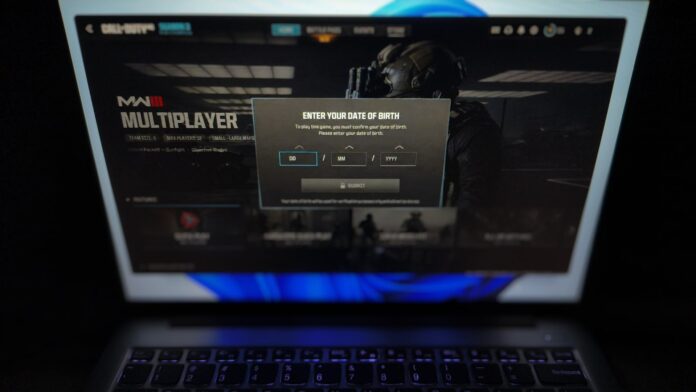
Previously, whenever an app or game needed to restrict mature content, comply with child-safety laws such as COPPA, or manage in-app transactions, it had to conduct its own age verification. This could involve requesting a date of birth, payment details, third-party identity checks, or relying on a weak honor-system checkbox stating, “I am 18+.”
Instead of requiring users to provide this information to individual apps, upcoming system-level APIs in Windows 11 will give registered applications an age range, such as 13–15 or 18+, along with a status indicating whether the user’s age has been independently verified.
MS says this will help developers adjust content, restrict features, and apply parental controls without requiring them to collect or store users’ birthdays, as regulators across the UK, EU, and U.S. push for stricter online age-assurance laws.
What Are Windows 11’s New Age Signals, and What Will Apps See?
First reported by Windows Latest, MS’s official age-signals documentation states: “The Windows Age APIs provide a privacy-preserving mechanism for apps to determine the age group and age verified status of the signed-in user.”
In practical terms, an app can ask two questions: which age bracket the user belongs to and whether that bracket has been independently verified.
Apps do not receive the user’s birthday. MS says an age signal does not directly reveal the user’s exact age or date of birth. Instead, GetUserAgeRangeAsync returns one of five age ranges.
The 18+ result uses INT32_MAX as its upper limit. A game or media app does not need to know that someone is exactly 14 years and eight months old; it only needs to determine whether the user falls below a particular threshold. MS’s range-based system is designed accordingly.

The second signal concerns age verification. Another API, GetAgeVerificationStatusAsync, can return one of the following statuses:
- Verified
- Unverified
- OptedOut
- TemporarilyUnavailable
- NotApplicable
These values indicate whether the user’s age has been independently verified by the identity provider. The API is available to both first-party and third-party callers.
Age range and age verification are not the same. An account can have an associated age range without that range having been independently verified.
MS says its Digital Safety platform validates the calling app’s identity before returning meaningful values, and apps must first be registered with the platform.
Therefore, not every app installed on a PC can access the user’s age signal. Intended use cases include user-generated content, social features, in-app purchases, and mature-rated media.
Why Is MS Doing This Now?
MS’s documentation says the APIs are intended to help apps comply with child-safety regulations, but the regulatory push extends far beyond Windows.
United Kingdom
UK regulators want platforms to identify which users are children. Under the Online Safety Act, Ofcom requires age-assurance systems to be highly effective in terms of technical accuracy, robustness, and reliability.
Ofcom’s July 2026 Use of Age Assurance Report also rules out age inference for minimum-age enforcement because it works only after a child has used a service long enough for their age to be inferred.
European Union
The EU favors privacy-preserving proof of age. The European Commission’s age-verification approach avoids forcing services to collect unnecessary identity information.
Its solution, known as the mini wallet, allows users to prove that they are over 18 without sharing additional information. It can also be adapted to other thresholds, such as 13+ or 65+.
United States
U.S. states are already advocating operating-system-level mandates, led by California’s Digital Age Assurance Act of 2026 in August. The legislation would make operating-system providers the primary source of age signals for apps and certain websites.
The bill is not a national ID card proposal because it explicitly rules out requiring government identification or biometric scans.
The FTC’s February 2026 COPPA policy statement also said it would not pursue certain enforcement actions involving age-verification data collection when the data is used solely to determine age, is not retained longer than necessary, and is properly secured.
Google and Apple Already Offer Their Own Age Signals
Google Play
Google Play has an Age Signals API. Google’s Play Age Signals overview describes a beta API that returns the following default ranges:
- 0–12
- 13–15
- 16–17
- 18+
Custom age ranges are also available.
Google’s model adds a sharing-status layer. A result can indicate that age signals are shared, not shared, or that verification is required. In some U.S. states, users may need to verify their age or establish supervision through Google Play.
Google’s terms prohibit developers from using this data for advertising, marketing, profiling, or analytics.
Apple
Apple takes a slightly different approach. Its Declared Age Range documentation provides developers with an age range based on the age gates requested by an app.
For children in Family Sharing, a parent or guardian can choose whether age information is always shared, never shared, or requested on an app-by-app basis.
Apple distinguishes information declared by users or guardians from information confirmed through a government ID or payment method. It also notes that developers remain responsible for enforcing their own age restrictions.
How Windows Developers Will Use the Age Signal
Both GetUserAgeRangeAsync and GetAgeVerificationStatusAsync appear in the Windows.System.User API reference, alongside their respective documentation pages. Both are listed for Windows 11, version 24H2, and identified as prerelease information.
MS’s Windows SDK release notes state that the APIs are not yet enabled at runtime but are expected to become available later this year:
“The age signal APIs (User.GetUserAgeRangeAsync, User.GetAgeVerificationStatusAsync, UserAgeRange, and UserAgeVerificationStatus) are documented ahead of availability. They aren’t enabled at runtime yet, and are planned to be turned on in a future release later this year.”
According to MS’s implementation guide, the developer workflow is straightforward:
- The app retrieves the current user through User::GetDefault().
- It calls GetUserAgeRangeAsync().
- Windows returns an age range or a null value.
- The app uses that result to make its own content decision.
The app can also call GetAgeVerificationStatusAsync() to obtain the verification state. Currently, every call returns an unknown age range and an unavailable status, so MS’s guide instructs developers to use normal behavior or their existing age-gating mechanism until the APIs are activated.
The API does not make MS responsible for every app’s age restrictions. Developers must still decide how to use the signal, a limitation Apple has also acknowledged.
The Privacy Trade-Off Is More Complicated
Without an OS-level signal, an app that needs to distinguish children from adults may have to build its own age-assurance system. This could involve collecting a date of birth, identity documents, payment information, facial-age estimates, or other evidence.
MS and other major technology companies are attempting to avoid a situation in which every app independently collects this sensitive information.
The trade-off is that trust shifts toward the platform. Unfortunately for MS, Windows has very little of it. The operating system becomes the intermediary that determines or receives age-related information and decides which signal an app is permitted to access.
MS’s documentation confirms that the API does not return a birthday and that the caller’s identity is validated. However, it does not explain every method MS might use to establish an account holder’s age in the first place.
Windows Is Turning Age Verification into a Platform Feature
MS will not disclose a user’s date of birth to Windows apps through these APIs. Instead, the company is developing an operating-system-level age signal that returns an age range and a separate verification status.
The UK wants more effective age assurance, the EU is building privacy-preserving proof-of-age infrastructure, the FTC is seeking to reduce problems associated with age verification, and U.S. lawmakers are considering their own OS-based age-signal framework.
Whether this ultimately improves privacy depends on what happens between the operating system and the app. However, compared with giving every app a birthday or identity document, an age-range signal clearly reveals less personal information.
Windows Latest depends on readers like you. Make us your preferred source on Google Discover and Google Search, and help our independent reporting reach more people.
Whether you're building a new PC or refreshing an old one, a Windows 11 OEM license is a smart choice for budget-conscious users. Whokeys.com provides Windows 11 OEM keys with instant delivery and full activation support — a trusted option for anyone looking for a genuine license at a fair price.