Naughty Dog: A Legacy of Innovation and Storytelling
From establishing itself as a defining force in the 3D platformer genre with Crash Bandicoot to crafting one of the most emotionally resonant narratives in interactive entertainment with The Last of Us, Naughty Dog is unequivocally one of the most influential and critically acclaimed studios in game development. With each major franchise, the team boldly shifts genres—moving from lighthearted mascot adventures to cinematic action epics and mature, character-driven drama. Its now-iconic paw print logo has become synonymous with ambitious production values, heart-wrenching storytelling, and memorable characters that transcend the medium.
Naughty Dog’s evolution—from colorful, accessible platformers to the industry’s benchmark for narrative depth—has unfolded across nearly two dozen titles, spanning fantasy RPGs, arcade racers, educational software, and post-apocalyptic survival experiences. Below is a complete, chronologically ordered list of every Naughty Dog–developed game released through 2025.
How Many Naughty Dog Games Are There?
Naughty Dog has developed 23 games in total: its debut title launched in 1985, and its most recent release arrived in 2022. This list includes all original releases, standalone expansions, and full remakes. Remasters—such as the 2024 The Last of Us Part II Remaster—and downloadable content (DLC) are excluded.
All Naughty Dog Games in Order
1. Math Jam – 1985

Math Jam marked the foundational project for what would become Naughty Dog. Developed collaboratively by founders Jason Rubin and Andy Gavin while still in high school, it was published under the studio name JAM for the Apple II. A purely educational title, it taught basic arithmetic concepts. Though functional and earnest, it served primarily as a proving ground—prompting Rubin and Gavin to pivot decisively toward entertainment-focused game design in their next project.
2. Ski Crazed – 1986

Released in 1986 when Rubin and Gavin were just 16 years old, Ski Crazed was their second Apple II title. Players controlled an avatar racing down varied ski slopes, navigating obstacles and striving for high scores. It showcased early experimentation with physics-based movement and real-time responsiveness—key building blocks for the studio’s future technical ambition.
3. Dream Zone – 1987

In 1987, Rubin and Gavin entered the point-and-click adventure genre with Dream Zone. Set within a satirical, dream-logic fantasy world, the game followed a protagonist navigating surreal environments and interacting with eccentric imaginary inhabitants—all in pursuit of escape. Its nonlinear structure and emphasis on environmental storytelling hinted at the narrative sophistication the studio would later refine.
4. Keef the Thief – 1989

This 1989 release marked the studio’s official debut under the Naughty Dog name—and its first publishing partnership with Electronic Arts (EA). Keef the Thief was a comedic, inventory-driven point-and-click adventure in which players assumed the role of Keef, a bumbling rogue exploring a vibrant city and surrounding wilderness. Its witty writing and playful tone established a signature voice that balanced humor with emergent player agency.
5. Rings of Power – 1991

Two years after Keef the Thief, Naughty Dog partnered again with EA to deliver Rings of Power for the SEGA Genesis. An isometric fantasy RPG, it cast players as Buc—a sorcerer in the realm of Ushka Bau—tasked with recovering eleven fragments of a shattered magical staff. The game featured party recruitment, turn-based combat, and a layered narrative culminating in a confrontation with the demon Void—demonstrating the studio’s growing ambition in world-building and systemic depth.
6. Way of the Warrior – 1994

Naughty Dog’s sixth title ventured into the competitive fighting genre with Way of the Warrior, released for the 3DO Interactive Multiplayer. Players selected from a roster of martial artists and battled through a tournament-style progression, facing increasingly formidable opponents. Though technically modest by modern standards, it reflected the studio’s willingness to explore diverse gameplay paradigms—and laid groundwork for future animation and timing systems.
7. Crash Bandicoot – 1996

Naughty Dog’s seventh game—and its first PlayStation title—Crash Bandicoot became its breakout success. Centered on the genetically mutated bandicoot Crash, who escapes the lab of the megalomaniacal Dr. Neo Cortex, the game redefined 3D platforming with tight controls, vibrant art direction, and tightly paced, obstacle-rich levels. Its blend of precision jumping, spinning attacks, and charismatic villainy launched a flagship franchise and cemented Naughty Dog’s reputation for polished, personality-driven design.
8. Crash Bandicoot 2: Cortex Strikes Back – 1997

The sequel picks up one year after the original, with Crash once again thwarting Cortex’s schemes—this time involving a series of magical crystals needed to construct the Cortex Vortex, a space-based weapon. Featuring 25 distinct stages, Crash Bandicoot 2: Cortex Strikes Back refined core mechanics, introduced new hazards and enemy behaviors, and expanded level design with greater verticality and interactivity—solidifying the trilogy’s technical and creative momentum.
9. Crash Bandicoot 3: Warped – 1998

The concluding chapter of Naughty Dog’s original Crash Bandicoot trilogy, Crash Bandicoot: Warped follows Crash and his sister Coco as they travel through time to collect crystals and prevent Cortex and the newly awakened Uka Uka from executing their apocalyptic plans. It retained the 25-level structure but added richer world variety, enhanced camera control, and—for the first time—a fully playable secondary protagonist in Coco, broadening narrative and mechanical scope.
10. Crash Team Racing – 1999

A genre departure and beloved spin-off, Crash Team Racing transported the Crash universe into high-speed arcade racing. Featuring iconic characters—including Crash, Cortex, Coco, and N.Gin—the game emphasized drift-based handling, track-specific hazards, and robust single- and multiplayer modes. Its tight tuning and charismatic presentation made it a standout kart racer and a testament to Naughty Dog’s versatility.
11. Jak and Daxter: The Precursor Legacy – 2001

With the PlayStation 2 era, Naughty Dog launched its next flagship franchise: Jak and Daxter: The Precursor Legacy. Departing from linear stage design, it offered expansive, interconnected worlds where players explored freely, collected Precursor Orbs, and unlocked abilities at their own pace. The story centered on Jak and his best friend Daxter—who transforms into an ottsel after exposure to dark eco—launching a quest that intertwined personal stakes with world-saving urgency.
12. Jak II – 2003

A bold tonal and mechanical reinvention, Jak II relocated the duo to the dystopian metropolis of Haven City. After two years of imprisonment and brutal experimentation, Jak awakens with the volatile Dark Jak persona. The game introduced guns, vehicles, urban traversal, and morally complex themes—marking Naughty Dog’s decisive shift toward cinematic, mature storytelling and systemic gameplay integration.
13. Jak 3 – 2004

Opening with Jak and Daxter exiled to the desert wasteland, Jak 3 concluded the trilogy by expanding on Jak II’s foundation. It introduced new light eco powers, additional vehicles for open-world traversal, upgraded weaponry, and deeper faction dynamics. Thematically, it explored redemption, legacy, and resilience—bringing the arc of Jak’s transformation full circle with emotional weight and mechanical cohesion.
14. Jak X: Combat Racing – 2005

Returning to the racing genre, Jak X: Combat Racing fused vehicular combat with high-octane track design. Players raced as Jak or key allies/enemies across stylized circuits, using weapons and power-ups to gain advantage. Its polished physics, responsive controls, and faithful character portrayals reinforced Naughty Dog’s mastery of arcade-style pacing and accessibility without sacrificing depth.
15. Uncharted: Drake’s Fortune – 2007

Naughty Dog’s debut on the PlayStation 3 signaled a paradigm shift: Uncharted: Drake’s Fortune pioneered cinematic, third-person action-adventure design. Following treasure hunter Nathan Drake through the Amazon rainforest in search of El Dorado, the game blended cover-based shooting, acrobatic platforming, and film-inspired set pieces. Its seamless integration of narrative, performance, and gameplay laid the groundwork for a generation of narrative-driven blockbusters.
16. Uncharted 2: Among Thieves – 2009

Widely regarded as a landmark achievement, Uncharted 2: Among Thieves elevated every facet of the formula. Set amid the Himalayas and ancient ruins of Shambhala, it deepened character relationships, intensified combat AI, and delivered unforgettable, physics-driven spectacle—from train derailments to collapsing temples. Its emotional resonance, technical polish, and narrative confidence cemented Naughty Dog’s status as a leader in interactive storytelling.
17. Uncharted 3: Drake’s Deception – 2011

The PlayStation 3 era’s final Uncharted entry, Uncharted 3: Drake’s Deception, sent Nathan Drake into the Rub’ al Khali desert in pursuit of the “Atlantis of the Sands.” With richer environmental storytelling, expanded melee combat, and psychologically layered antagonists—including Katherine Marlowe—the game probed themes of identity, obsession, and consequence. Its visual fidelity and nuanced performances represented the pinnacle of PS3-era craftsmanship.
18. The Last of Us – 2013

A generational milestone, The Last of Us redefined emotional engagement in games. Set in a fungal-infected post-apocalypse, it followed Joel—a hardened smuggler—and Ellie—an immune teenager—as they journeyed across America seeking the Fireflies. Its grounded performances, restrained pacing, and morally ambiguous choices prioritized empathy over exposition. Widely hailed as one of the most iconic video games of all time, it became Naughty Dog’s flagship franchise—and inspired a critically acclaimed HBO adaptation in 2023.
19. The Last of Us: Left Behind – 2014

Originally released as DLC and later as a standalone title, The Last of Us: Left Behind served as a powerful prequel and companion piece. Interweaving two timelines—one following Ellie protecting an injured Joel, the other depicting her final day with best friend Riley in an abandoned mall—the expansion deepened Ellie’s emotional interiority and contextualized pivotal revelations from the main narrative. Its quiet, intimate moments underscored Naughty Dog’s commitment to character-first storytelling.
20. Uncharted 4: A Thief’s End – 2016

The culmination of Nathan Drake’s saga, Uncharted 4: A Thief’s End reunited players with a retired Drake, drawn back into adventure by the reappearance of his long-lost brother Sam. Leveraging the PlayStation 4’s capabilities, it introduced a grappling hook, more organic level design, and unprecedented visual fidelity. Its reflective tone, thematic maturity, and poignant resolution honored the series’ legacy while pushing technical and narrative boundaries.
21. Uncharted: The Lost Legacy – 2017

A self-contained, narrative-driven expansion to Uncharted 4, Uncharted: The Lost Legacy shifted focus to Chloe Frazer and Nadine Ross as they pursued the Tusk of Ganesh across India. Built on an open-ended map structure, it allowed players to approach objectives non-linearly—enhancing exploration, discovery, and player agency. Its strong characterization and cultural specificity demonstrated Naughty Dog’s continued evolution in inclusive, globally resonant storytelling.
22. The Last of Us: Part II – 2020

The Last of Us: Part II centered Ellie’s perspective in a harrowing, morally complex revenge odyssey set in Jackson and Seattle. Stripping away Joel’s protective presence, it emphasized vulnerability, consequence, and cyclical violence. Enhanced stealth systems, adaptive enemy AI, and deeply immersive world design elevated gameplay immersion. Though its narrative provoked intense debate, its technical execution and emotional rigor reaffirmed Naughty Dog’s position at the forefront of narrative innovation.
Note: The Last of Us Part II Remastered launched on PS5 in 2024 and PC in 2025, featuring graphical enhancements and the new roguelike mode No Return.
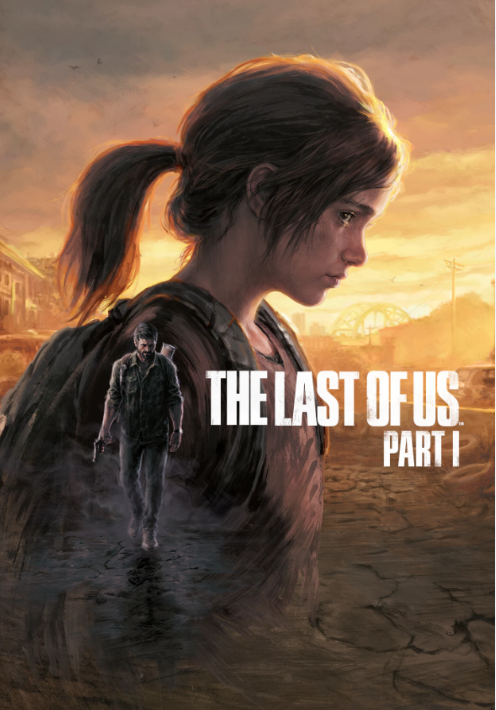
23. The Last of Us: Part I – 2022

Released in late 2022, The Last of Us: Part I was a ground-up remake of the original game—including the Left Behind expansion. Built natively for PlayStation 5, it delivered photorealistic visuals, refined animations, expanded accessibility features, and gameplay refinements—honoring the source material while showcasing next-generation fidelity and inclusivity.
Upcoming Naughty Dog Games
Intergalactic: The Heretic Prophet is Naughty Dog’s next major release—and its first original IP since The Last of Us in 2013. Announced at The Game Awards 2024, the project appears well into development. However, studio leadership has indicated a 2027 or later release window, suggesting it may debut alongside—or even define—the PlayStation 6 generation.
While Intergalactic remains the only officially confirmed project, Creative Director Neil Druckmann has acknowledged conceptual work on potential future narratives—including speculative remarks about The Last of Us Part III. Yet he has also stated publicly that “don’t bet on there being a The Last of Us Part III”. Meanwhile, The Last of Us Season 2—adapting Part II—premieres this weekend on Max.
Explore more developer histories:
Callum Williams is a freelance media writer with years of experience as a game critic, news reporter, guides writer and features writer.